Best Crypto Exchanges Complete Guide
You can compare top crypto trading platforms for fees, supported coins, fiat access, security and user experience in this comprehensive guide that helps you find your ideal exchange.
Introduction
Choosing the right cryptocurrency exchange is one of the most critical decisions for any crypto investor, as it directly impacts your trading costs, security, available assets, and overall investment experience. With hundreds of exchanges operating globally in 2025, each offering different features, fee structures, and security measures, making an informed choice requires comprehensive analysis and understanding of your specific needs. This comparison examines the leading cryptocurrency exchanges to help you identify the platform that best aligns with your trading goals, risk tolerance, and geographic location.
Your exchange choice matters immensely because it affects your trading costs, security, and investment opportunities every single day. You should evaluate which factors matter most to your specific situation before you commit your capital to any platform.
You should recognise that modern exchanges have become financial powerhouses offering dozens of services beyond spot trading. Your options now include futures, options, staking, lending, and even banking services - so you must decide which capabilities your investment strategy actually requires.
You benefit directly from this fierce competition between exchanges, because it drives better security, lower fees, and smoother user experiences across the board. You should take advantage of these improvements by comparing platforms regularly and switching when a competitor offers genuinely better value for your trading profile.
Regulatory developments have significantly shaped the exchange industry, with platforms now operating under various licensing frameworks across different jurisdictions. You benefit from this regulatory clarity through improved consumer protections, enhanced security standards, and growing institutional adoption, but you must also navigate geographic restrictions and compliance requirements that affect platform availability and features in your region. Understanding these regulatory implications is crucial to selecting an exchange that remains accessible and compliant in your jurisdiction.
You must understand that regulations vary greatly by country, and your preferred exchange may not be licensed in your jurisdiction. You should verify local licensing status before depositing funds, because geographic restrictions can affect your platform availability, withdrawal limits, and the features you can access.
Security remains paramount in exchange selection, as the history of cryptocurrency is marked by significant exchange hacks and user fund losses. You will find that leading platforms have implemented advanced security measures, including cold storage, multi-signature wallets, insurance coverage, and regular security audits. However, security practices vary significantly between exchanges, making it essential to evaluate each platform's track record, security architecture, and risk management procedures before committing funds.
You should check your exchange's security track record before depositing any funds, because exchange hacks have cost billions historically. Your chosen platform must use cold storage, multi-signature wallets, and regular independent audits - and you can verify these claims through proof-of-reserves reports and third-party security assessments.
You will find in this comprehensive comparison a detailed analysis of the top cryptocurrency exchanges across multiple criteria, including fees, security, supported assets, user experience, regulatory compliance, and special features. We examine both centralised and decentralised options, evaluate their strengths and weaknesses, and provide practical guidance for selecting the exchange that best meets your specific requirements. Whether you're a beginner seeking simplicity and security or an advanced trader requiring sophisticated tools and low fees, this guide provides the insights needed to make an informed decision about your exchange selection.
You will find detailed fee comparisons, security analysis, and asset selection breakdowns for all major platforms in this guide. Whether you are a beginner seeking simplicity or an advanced trader requiring sophisticated tools, you can use these insights to match your specific trading profile with the right exchange.
The Crypto Exchange Landscape
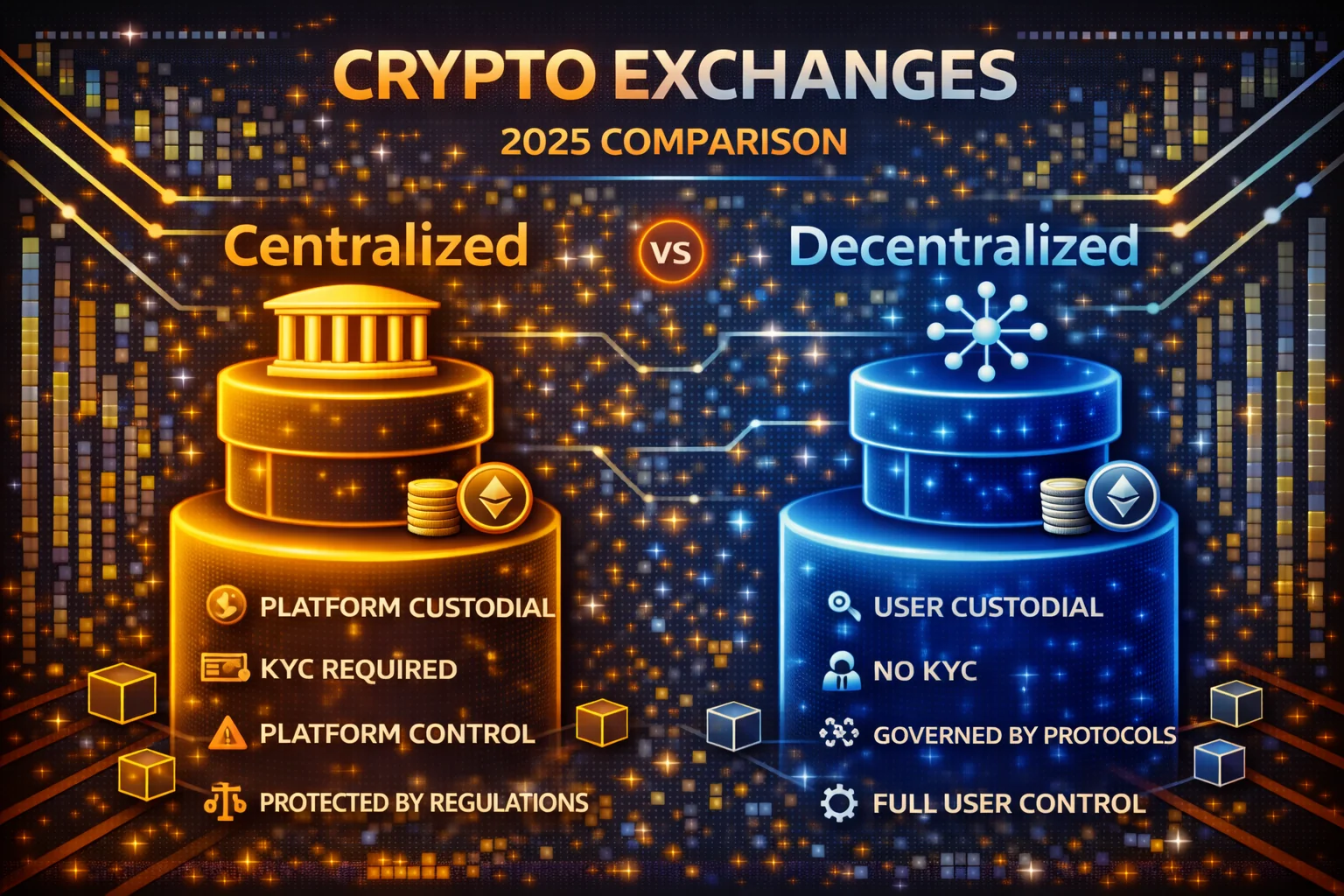
Your choice of exchange affects your fees, supported coins, security, and withdrawal freedom. In 2025, centralised platforms remain dominant for liquidity and fiat ramps, but the landscape has evolved significantly with improved security, regulatory compliance, and innovative features.
You should recognise that the market has changed dramatically, and you can now benefit from fierce competition between exchanges that drives better security, lower fees, and more innovative features for your trading experience. You must consider these key improvements when evaluating your options:
- Enhanced security measures protect funds better
- Lower fees through increased competition
- More services beyond simple trading
- Better regulatory compliance worldwide
- Improved user interfaces and mobile apps
Market Evolution and Trends
You should recognise that the crypto exchange industry has matured considerably, with platforms now offering comprehensive financial services well beyond simple trading. You can now access staking, lending, derivatives, NFT marketplaces, and even traditional banking services from a single exchange account. You benefit from improved regulatory clarity globally, which has strengthened consumer protections and accelerated institutional adoption.
You should understand that modern exchanges offer far more than simple trading - your platform can now provide staking, lending, derivatives, and even banking services under one roof. You must decide which of these capabilities your investment strategy actually requires before you commit to a platform.
Key Factors Driving Exchange Selection
- Regulatory Compliance: Exchanges with proper licensing offer better security and legal protection
- Liquidity Depth: Higher liquidity means better prices and faster execution
- Product Diversity: Modern users expect spot trading, derivatives, staking, and DeFi access
- Geographic Accessibility: Regional restrictions and local payment methods matter
- Security Track Record: Past incidents and current security measures influence trust
You should evaluate multiple factors systematically when choosing your exchange, because licensing protects your legal rights, liquidity affects your execution prices, and security history reveals how reliably a platform protects your funds. You can use this checklist to guide your evaluation:
- Check licensing status in your country
- Compare liquidity across trading pairs
- Review available products and services
- Verify geographic accessibility
- Research security incident history
Comparison Criteria
- Trading Fees - Maker/taker, spreads, hidden costs
- KYC Requirements - Anonymous access vs full ID
- Fiat On/Off-Ramp - Card, SEPA, Apple Pay, etc.
- Mobile UX - Apps, wallet integration, DEX access
- Security - Cold storage, audits, regulation
Quick Exchange Comparison
| Platform | Fees | Fiat Access | KYC | Security |
|---|---|---|---|---|
| Binance | 0.1% | Card, SEPA | Tiered | SAFU Fund |
| Kraken | 0.16% | Bank, ACH | Full KYC | U.S. regulated |
| OKX | 0.08% | Card, P2P | Email-only tier | Proof of Reserves |
| KuCoin | 0.1% | P2P, third-party | Email login | Risk fund |
| Bybit | 0.1% | Card, P2P | Partial tiers | Asset protection fund |
| Coinbase | 0.5% | Card, ACH | Strict KYC | U.S. public company |
| Gemini | 0.35% | Bank, ACH | Full KYC | FDIC insured USD |
| Gate.io | 0.2% | Card, P2P | Tiered | Insurance fund |
Comprehensive Platform Analysis
Binance - Global Liquidity Leader
You should know that Binance remains the world's largest cryptocurrency exchange by trading volume, and your trades benefit from unparalleled liquidity and the most comprehensive suite of products available on any single platform.
You should consider Binance if you need the deepest liquidity and widest product range, because your trades will execute at better prices and you can access spot, futures, staking, and lending all from one account.
Key Strengths
- Massive Liquidity: Deepest order books for major trading pairs
- Low Fees: Starting at 0.1% with volume discounts
- Product Diversity: Spot, futures, options, staking, lending, NFTs
- Global Reach: Available in 180+ countries
- SAFU Fund: $1B+ emergency insurance fund
- Innovation: Launchpad, Launchpool, and new product development
Best For
- Active traders seeking maximum liquidity
- Altcoin enthusiasts with access to 600+ cryptocurrencies
- Users wanting comprehensive crypto financial services
- International users outside restricted jurisdictions
Kraken - Regulated and Transparent
You should consider Kraken if you value a proven security track record, because your funds benefit from a platform built on transparency and regulatory compliance that institutions trust with large holdings.
You should choose Kraken if security is your top priority, because your funds benefit from a platform that has never been hacked in over 12 years and maintains exemplary regulatory compliance across multiple jurisdictions.
Key Strengths
- Regulatory Compliance: Licensed in multiple jurisdictions
- Security Focus: Never been hacked in 12+ years
- Transparency: Regular proof-of-reserves audits
- Fiat Integration: Strong banking relationships
- Professional Services: OTC desk and institutional products
- Staking Services: Native staking for 12+ cryptocurrencies
Best For
- Security-focused investors and institutions
- U.S. residents seeking regulated platform
- Users prioritising transparency and compliance
- Long-term holders interested in staking
OKX - Innovation and Flexibility
You can benefit from OKX's combination of the lowest maker fees in the industry with strong DeFi integration and a flexible KYC approach that suits your privacy preferences.
You should consider OKX if you want the lowest trading fees combined with seamless DeFi integration, because your maker fees start at just 0.08% and you can access decentralised protocols directly through the built-in Web3 wallet.
Key Strengths
- Lowest Fees: Starting at 0.08% for makers
- DeFi Integration: Built-in DEX and DeFi protocols access
- Flexible KYC: Tiered verification allowing anonymous trading
- Advanced Trading: Sophisticated derivatives and options
- Web3 Wallet: Integrated multi-chain wallet
- Copy Trading: Social trading features
Best For
- Cost-conscious traders seeking lowest fees
- DeFi users wanting centralised-decentralised bridge
- Privacy-focused users preferring minimal KYC
- Advanced traders using derivatives and options
KuCoin - Altcoin Discovery Hub
Note for US users: KuCoin permanently exited the US market in March 2026 following a US$297 million DOJ guilty plea (January 2025) and a US$500,000 CFTC consent order. US-based users cannot register or trade on KuCoin. The assessment that follows applies only to non-US jurisdictions.
You should explore KuCoin if your strategy focuses on discovering early-stage altcoins, because your access to emerging projects comes with minimal barriers to entry and email-only registration.
You should explore KuCoin if you want early access to emerging altcoin projects, because your registration requires only an email address and you can start trading new tokens before they appear on larger exchanges.
Key Strengths
- Altcoin Selection: 700+ cryptocurrencies including new projects
- Anonymous Trading: Email-only registration for basic features
- Early Listings: First to list many successful projects
- Trading Bots: Built-in automated trading strategies
- Futures Trading: Comprehensive derivatives platform
- Pool-X: Staking and mining services
Best For
- Altcoin hunters seeking new opportunities
- Users preferring anonymous trading
- Traders interested in automated strategies
- International users in restricted regions
Bybit - Derivatives and Innovation
You should consider Bybit if your trading focuses on derivatives, because your experience benefits from a platform that has evolved from derivatives-only into a comprehensive exchange with excellent spot trading and innovative copy trading features.
Key Strengths
- Derivatives Excellence: Advanced perpetual and futures contracts
- User Experience: Intuitive interface and mobile app
- Copy Trading: Follow successful traders automatically
- Launchpad: Early access to new token launches
- Earn Products: Flexible and fixed staking options
- Customer Support: 24/7 multilingual support
Best For
- Derivatives traders and leverage users
- Mobile-first users seeking excellent UX
- Social traders using copy trading features
- Users wanting comprehensive earning products
Coinbase - Mainstream Adoption Leader
You should start with Coinbase if you are new to cryptocurrency. Your funds benefit from the highest regulatory compliance, FDIC insurance on USD balances, and the simplest interface on any major exchange.
Key Strengths
- Regulatory Leadership: First major exchange to go public
- User-Friendly: Simplest interface for beginners
- Fiat Integration: Seamless bank and card connections
- Insurance: FDIC insurance for USD balances
- Educational Content: Comprehensive learning resources
- Institutional Services: Coinbase Prime for large investors
Best For
- Cryptocurrency beginners and mainstream users
- U.S. residents seeking maximum regulatory protection
- Institutions requiring compliance and insurance
- Users prioritising simplicity over advanced features
Comprehensive Fee Analysis
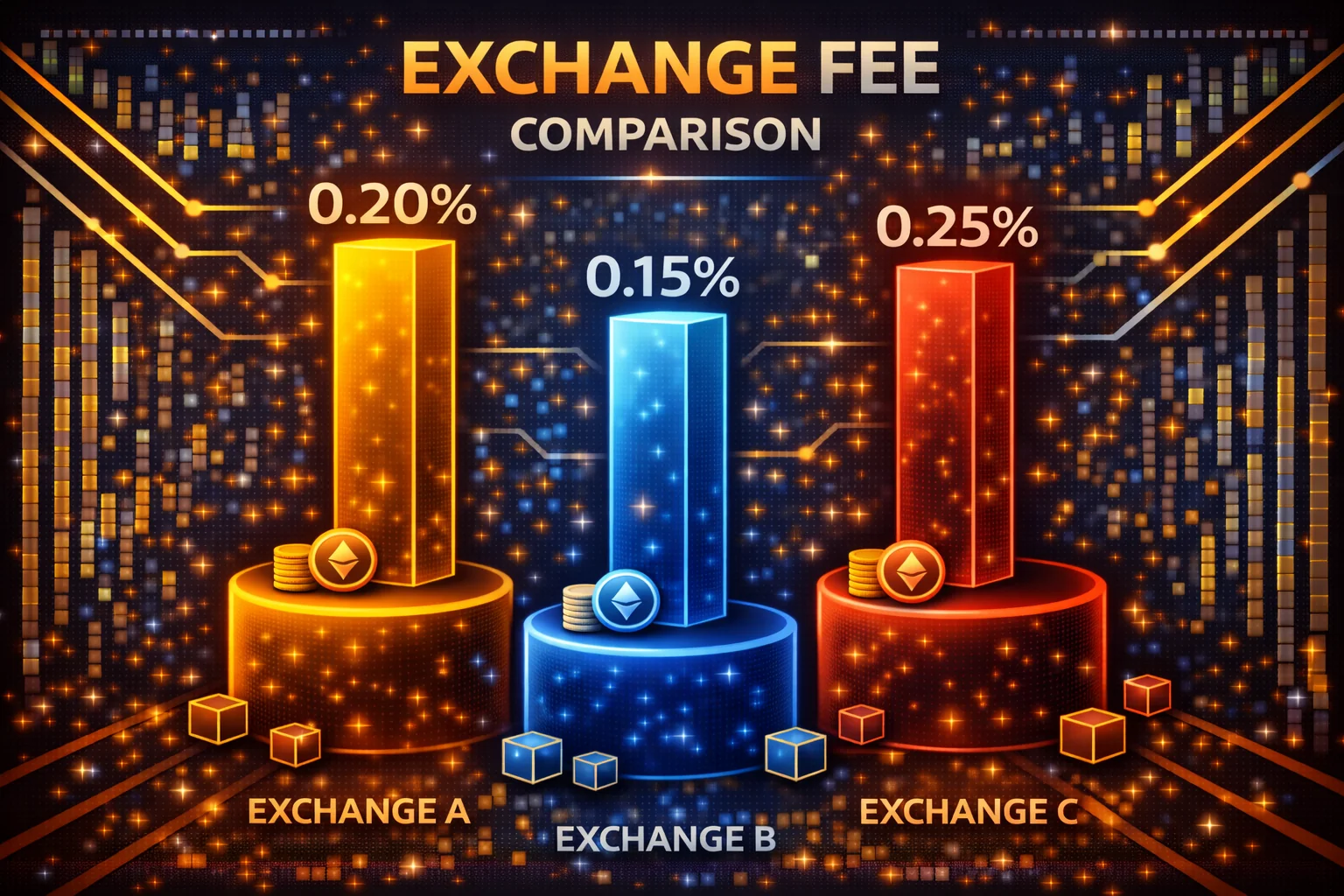
You must understand exchange fees thoroughly to maximise your returns across different platforms. Your effective fee rate varies significantly depending on the platform, your trading volume, and your user tier. You should also factor in withdrawal fees, deposit fees, and hidden costs like spreads when calculating your true trading expenses.
Trading Fee Structures
- Maker-Taker Model: Different rates for adding vs removing liquidity
- Volume Discounts: Lower fees for higher 30-day trading volumes
- Token Discounts: Reduced fees when paying with native tokens
- VIP Programs: Additional benefits for large traders
Hidden Costs to Consider
- Spread Costs: Difference between buy and sell prices
- Withdrawal Fees: Network fees for moving crypto off-platform
- Deposit Fees: Costs for funding accounts with fiat or crypto
- Conversion Fees: Costs for currency exchanges
- Inactivity Fees: Charges for dormant accounts
Fee optimisation Strategies
- Use limit orders to qualify for maker fees
- Increase trading volume to reach lower fee tiers
- Pay fees with native tokens when available
- Consider fee-free promotions for new users
- Batch transactions to minimise withdrawal fees
Security and Risk Management
You must understand that security determines whether your funds survive, because exchange hacks have cost billions historically and your protection requires multiple security layers from both the platform and your own practices.
Exchange Security Measures
- Cold Storage: Majority of funds stored offline
- Multi-Signature: Multiple keys required for transactions
- Insurance Funds: Emergency reserves for security incidents
- Regular Audits: Third-party security assessments
- Regulatory Compliance: Adherence to local financial regulations
You should verify that your chosen exchange implements multiple protections before you deposit funds, because cold storage, multi-signature wallets, insurance reserves, regular third-party audits, and regulatory compliance are the minimum security standards you must demand from any platform holding your assets:
- 95%+ funds in cold storage
- Multi-signature wallet architecture
- Insurance fund of $100M+
- Annual third-party security audits
- Regulatory licenses and compliance
User Security Best Practices
- Two-Factor Authentication: Enable 2FA on all accounts
- Strong Passwords: Use unique, complex passwords
- Withdrawal Whitelists: Restrict withdrawals to approved addresses
- Regular Monitoring: Check account activity frequently
- Phishing Awareness: Verify URLs and avoid suspicious links
You control your account security directly, so you should enable two-factor authentication immediately after registration. You must use unique passwords for each exchange, whitelist your withdrawal addresses, and monitor your account activity regularly to catch suspicious behaviour early:
- Enable 2FA with authenticator app
- Create strong unique passwords
- Whitelist all withdrawal addresses
- Set up email and SMS alerts
- Bookmark official exchange URLs
Risk Mitigation Strategies
- Diversify across multiple exchanges
- Keep only trading amounts on exchanges
- Use hardware wallets for long-term storage
- Understand insurance coverage limitations
- Stay informed about exchange developments
You should spread your risk across multiple platforms and never keep all your funds on a single exchange. You must move your long-term holdings to hardware wallets while keeping only active trading amounts online to minimise your exposure:
- Use 3-4 different exchanges
- Keep only trading funds online
- Store long-term holdings offline
- Review insurance coverage details
- Monitor security news regularly
Exchange Selection Framework
You should match your exchange choice to your specific trading profile, because your experience level, trading frequency, privacy preferences, and geographic location all determine which platform will serve you best and you can use this framework to narrow your options systematically.
By User Type
Beginners
- Recommended: Coinbase, Kraken
- Why: User-friendly interfaces, educational resources, strong support
- Features: Simple buying, automatic staking, learning rewards
You should start with Coinbase or Kraken if you are new to cryptocurrency. Both platforms offer user-friendly interfaces, educational resources, and responsive support that will help you build confidence before exploring advanced features:
- Create account on beginner-friendly platform
- Complete identity verification process
- Enable all security features
- Start with small test deposit
- Explore educational resources available
Active Traders
- Recommended: Binance, OKX, Bybit
- Why: Low fees, advanced tools, high liquidity
- Features: Advanced charting, derivatives, API access
You should choose Binance, OKX, or Bybit if you trade actively. Your execution costs drop significantly with their lower fee structures, and you gain access to advanced charting, derivatives, and API automation:
- Advanced charting with 100+ indicators
- API access for automated trading
- Low latency order execution
- Deep order books for large trades
- Professional trading interfaces
Privacy-Conscious Users
- Recommended: KuCoin, OKX
- Why: Minimal KYC requirements, anonymous trading options
- Features: Email-only registration, privacy coins support
You should consider KuCoin or OKX if you value privacy. Both platforms offer tiered KYC levels that let you start trading with just an email address, though you must accept lower withdrawal limits without full verification.
Institutional Investors
- Recommended: Kraken, Coinbase, Binance
- Why: Regulatory compliance, insurance, professional services
- Features: OTC desks, custody services, compliance tools
You should choose Kraken, Coinbase, or Binance if you manage institutional funds, because your compliance requirements demand platforms with proper regulatory licensing, insurance coverage, OTC desks, and professional custody services that meet institutional standards.
By Geographic Region
United States
- Fully Compliant: Coinbase, Kraken
- Limited Access: Binance.US (restricted states)
- Considerations: State-specific regulations, tax reporting
European Union
- MiCA Compliant: Binance, Kraken, OKX
- Local Options: Bitstamp, Bitpanda
- Considerations: SEPA transfers, VAT implications
Asia-Pacific
- Regional Leaders: Binance, OKX, Bybit
- Local Exchanges: Country-specific platforms
- Considerations: Local payment methods, regulatory changes
By Use Case
Your trading strategy should determine your ideal platform, because long-term holders need different features from day traders and altcoin hunters require broader token selection than mainstream investors.
Long-term Investing
- Best Platforms: Coinbase, Kraken, Binance
- Key Features: Staking services, security, insurance
- Strategy: Dollar-cost averaging, automatic investing
You should prioritise security and staking features if you invest long-term. Your passive income from staking rewards, insurance coverage, and automatic recurring purchases will simplify your accumulation strategy while protecting your holdings:
- Automatic recurring buy orders
- Staking for passive income
- Insurance coverage verification
- Cold storage for holdings
- Long-term price charts and analysis
Day Trading
- Best Platforms: Binance, OKX, Bybit
- Key Features: Low latency, advanced tools, high liquidity
- Strategy: Scalping, arbitrage, technical analysis
You must prioritise speed and liquidity if you day trade. Low latency prevents slippage on your entries, advanced charting enables your technical analysis, and volume-based fee discounts reduce your costs:
- Sub-millisecond order execution
- Advanced order types (stop-loss, OCO)
- Real-time market data feeds
- Volume-based fee discounts
- Mobile trading apps for flexibility
Altcoin Discovery
- Best Platforms: KuCoin, Binance, OKX
- Key Features: Early listings, wide selection, research tools
- Strategy: Fundamental analysis, trend following
You should explore KuCoin first if you hunt altcoins, because it consistently lists new projects before other major exchanges. Your chances of finding early opportunities increase significantly when you have access to a wide token selection combined with solid research tools for proper evaluation. You can maximise your potential gains through early entry, so consider these strategies for discovering new projects:
- Monitor new listing announcements
- Research project fundamentals thoroughly
- Start with small position sizes
- Use stop-losses to limit risk
- Track community sentiment and development
Future Trends and Developments
The exchange industry changes quickly, so review your setup as regulation and product design evolve. Early monitoring helps you control fees, reduce transfer friction, and avoid reactive platform moves during stressed market periods.
Regulatory Evolution
You should monitor how the regulatory landscape continues evolving globally, because clearer frameworks in major jurisdictions will favour your compliant exchange choices while potentially limiting your access to privacy-focused platforms.
You should treat compliance quality as an execution filter for your exchange selection, because unclear legal status often appears later as withdrawal delays, product removals, or account restrictions that can disrupt your trading operations.
Technology Innovations
- Layer 2 Integration: Reduced fees through scaling solutions
- DeFi Bridges: Seamless CeFi-DeFi integration
- AI Trading Tools: Advanced algorithmic trading features
- Cross-Chain Support: Multi-blockchain asset management
You should pay attention to technology upgrades because they directly affect your daily execution. Your transfer costs can drop significantly through Layer 2 integrations, your capital efficiency can improve with better bridge tooling, and your rebalancing workflow can simplify through stronger cross-chain support. You must focus on reliability under load rather than feature count alone when evaluating platform technology.
Market Consolidation
You should recognise that market consolidation is accelerating as large exchanges bundle trading, custody, and yield services. Your convenience improves, but your concentration risk rises if too much capital sits on one venue.
Final Recommendations
The right crypto exchange depends on your specific needs, location, and trading style. Consider starting with a regulated, beginner-friendly platform like Coinbase or Kraken, then expanding to specialised exchanges as your needs evolve.
You must accept that no universal best exchange exists for every trader. Your setup should match your specific jurisdiction, risk tolerance, and operating profile precisely. You should build your exchange strategy around repeatable requirements rather than chasing short-term promotional offers.
Multi-Exchange Strategy
You should consider employing a multi-exchange approach like many experienced users do:
- Primary Exchange: Main platform for regular trading and fiat access
- Secondary Exchange: Backup platform or specialised features
- Altcoin Exchange: Platform for discovering new projects
- Derivatives Platform: specialised exchange for advanced trading
You should run a multi-exchange model with one venue for your core fiat and spot flow, one for redundancy, and specialised venues for niche assets. This structure reduces your dependency risk during outages or policy changes.
You must test your security controls, withdrawal routes, and transfer paths in advance for redundancy to work. You should keep clear compliance records and size your exposure so that one platform incident does not force emotional decisions.
Getting Started Checklist
- Research regulatory compliance in your jurisdiction
- Compare fees for your expected trading volume
- Test user interface with small amounts first
- Enable all available security features
- Understand withdrawal limits and procedures
- Set up backup authentication methods
You should use this checklist before each new deposit cycle to protect your funds. Verify local compliance, calculate effective fees, test funding plus withdrawals with small amounts, and document backup authentication access.
- Verify exchange is licensed locally
- Calculate total fees for your trading volume
- Make small test deposit and withdrawal
- Enable 2FA and withdrawal whitelist
- Practice withdrawal process
- Set up backup 2FA method
Implementation Strategies
Adopt exchanges in stages: start with low-size testing, verify controls, then scale after consistent execution. You should track fills, transfer reliability, support response time, and effective cost per cycle to optimise your strategy.
Gradual Adoption Approach
Start with small amounts on your chosen primary exchange to test functionality and user experience before committing larger funds.
You should test each new exchange with minimal deposits first before committing larger amounts. You must learn the interface thoroughly and verify that withdrawal procedures work correctly with your preferred methods. You should also check customer support responsiveness and only scale up your deposits after your confidence in the platform builds through consistent positive experiences.
Security Best Practices
Enable two-factor authentication immediately and use hardware security keys when available for maximum account protection.
Your security setup should always come first when onboarding to any new exchange platform. You must enable 2FA during registration and use hardware security keys whenever the platform supports them. You should whitelist your withdrawal addresses immediately after account creation and review your security settings regularly to ensure maximum protection of your funds.
Performance Monitoring
You should establish systematic monitoring procedures to track performance metrics, fee structures, and service quality across your different platforms. Regular evaluation helps identify optimisation opportunities and ensures your strategy remains aligned with evolving market conditions and personal objectives. Implement automated alerts for significant price movements and maintain detailed transaction records for tax reporting and performance analysis.
You should track your performance across platforms by monitoring fees paid monthly, comparing execution quality regularly, and keeping detailed records for your tax reporting and performance analysis.
Contingency Planning
Develop backup plans for exchange outages or regulatory changes that might affect platform availability in your jurisdiction.
You should always have backup options ready by maintaining accounts on multiple exchanges, knowing your alternative platforms in advance, and preparing withdrawal strategies before regulatory changes affect your primary platform.
Exchange Ecosystem Development and Market Evolution
Institutional Adoption and Professional Services Expansion
You should recognise that institutional adoption has transformed the exchange landscape. Your platform now offers professional services including advanced custody and compliance frameworks previously reserved for hedge funds.
You can now access professional services that were previously reserved for hedge funds, including dedicated account management, customised trading solutions, and comprehensive reporting that meets your institutional requirements while bridging traditional finance and cryptocurrency markets.
Regulatory Evolution and Compliance Frameworks
You must evaluate regulatory compliance as a critical factor in your exchange selection, because platforms with comprehensive compliance frameworks protect your legal standing across different jurisdictions through enhanced KYC procedures and sophisticated anti-money laundering systems.
You should prioritise exchanges that implement proactive regulatory engagement and comprehensive audit capabilities, because your platform must maintain compliance whilst serving you across different jurisdictions as the regulatory landscape continues evolving.
Technology Innovation and Platform Development
You can benefit from continuous technology innovation that drives exchange platform development, including advanced trading algorithms, sophisticated order management systems, and comprehensive analytics capabilities that enable your professional trading while maintaining accessibility through intuitive interfaces.
You should evaluate whether your platform integrates with emerging blockchain networks and offers cross-chain functionality that enables you to participate in diverse cryptocurrency ecosystems through a unified interface.
Market Liquidity and Trading Infrastructure
You must consider market liquidity as a fundamental factor in your exchange selection, because deep order books and sophisticated market-making systems ensure your trades execute efficiently at competitive prices.
You should verify that your chosen platform maintains advanced matching engines and comprehensive liquidity aggregation that optimise your execution quality across diverse trading pairs and market conditions.
Security Architecture and Risk Management Systems
You should demand multi-layered security from your exchange, including cold storage solutions, advanced encryption protocols, and comprehensive monitoring systems that protect your assets against evolving cyber threats.
Your platform must implement hardware security modules, multi-signature wallet protections, and sophisticated intrusion detection that provides institutional-grade asset protection while maintaining your operational accessibility.
Regulatory Compliance and Global Market Access
You should verify that your exchange holds appropriate licences and implements comprehensive compliance frameworks that enable your access to global markets while meeting your jurisdiction's specific requirements.
Your platform must maintain automated reporting systems, comprehensive audit trails, and sophisticated monitoring capabilities that ensure regulatory adherence while keeping your trading operations efficient and accessible.
Innovation and Technology Development
You can gain competitive advantages by choosing exchanges that invest in artificial intelligence integration for trading optimisation, machine learning algorithms for fraud detection, and advanced user interface development that simplifies your complex trading operations.
You should evaluate your platform's roadmap for decentralised exchange integration, cross-chain trading capabilities, and advanced derivatives products that will expand your trading opportunities while maintaining security standards.
You should implement a systematic evaluation framework that considers liquidity depth, fee structures, security protocols, and regulatory standing to make informed decisions that optimise your trading performance while maintaining appropriate risk management.
Advanced Trading Strategies and Professional Implementation
You should implement systematic approaches to platform utilisation by leveraging multiple exchanges to access optimal liquidity, minimise your slippage, and capture arbitrage opportunities that enhance your overall trading profitability.
Your professional implementation must include establishing trading governance frameworks, maintaining comprehensive audit trails, and developing sophisticated reporting capabilities that meet institutional standards for your operations.
Security Excellence and Operational Risk Management
You must implement comprehensive risk management frameworks that encompass systematic position sizing, exposure monitoring, and portfolio diversification techniques to protect your capital while maximising growth potential.
Your risk controls should include automated stop-loss systems, correlation analysis, and systematic stress testing that ensure sustainable trading performance through disciplined capital preservation.
Regulatory Compliance and Professional Standards
You should maintain comprehensive regulatory compliance frameworks that address your jurisdiction's specific requirements, reporting obligations, and audit trail maintenance for your trading operations.
Your compliance approach must encompass tax optimisation strategies, regulatory reporting requirements, and professional liability management that enable you to trade sustainably while optimising your after-tax returns.
Exchange Due-Diligence Playbook (Pre-Funding Checks)
Before you deposit funds, run a strict due-diligence checklist that focuses on operational risk rather than marketing claims. Your safest exchange choice is usually the one with transparent controls, predictable execution, and clear jurisdictional compliance. A platform can look competitive on fees while still creating hidden risk through weak withdrawal controls, unclear reserve disclosures, or inconsistent incident communication.
You should start with account-level security controls and test them in sequence: hardware key support, anti-phishing codes, withdrawal whitelists, and recovery workflows for lost devices. If any of these controls feel difficult to configure or poorly documented, you should treat that as an operational warning, since emergency access quality matters most when markets are moving quickly and support queues are overloaded.
Then verify execution quality using a small trial allocation, for example $500 to $1,000, and record the real spread, withdrawal latency, plus final fee impact across two typical trades and one withdrawal. This micro-test gives you measurable data about slippage, settlement reliability, and support responsiveness before you commit larger capital to the platform.
If you plan to combine spot trading with passive yield, connect exchange selection to your next workflow step instead of evaluating each product in isolation. You can pair this guide with the staking platforms guide, then validate exchange-specific details in focused reviews such as Coinbase or KuCoin.
Re-check this framework quarterly even if your current setup works, because exchange risk profiles can shift after product launches, policy updates, or regional regulatory actions. A repeatable review process helps you maintain liquidity access, reduce counterparty concentration, and preserve execution quality as market structure continues to evolve.
Exchange Reliability Drill (Bi-Weekly Execution Check)
You should run one bi-weekly reliability drill instead of assuming historical performance still holds. Can you complete one deposit, one market order, and one withdrawal during volatility on your chosen exchange? Your operational certainty matters far more than headline fee discounts when real money is at stake.
You should keep your drill small and measurable for consistent tracking. Use a fixed test amount, log spread and final fees, then compare support response quality across platforms. You should cross-check your onboarding assumptions with the Coinbase review and validate altcoin-routing risk with the KuCoin review.
- Track withdrawal completion time.
- Record effective fee impact after spread.
- Test backup access controls before changing devices.
- Review one incident-response scenario per cycle.
Conclusion
You now have unprecedented choice in the cryptocurrency exchange landscape. Leading platforms provide comprehensive financial services beyond simple trading, and you should leverage each platform's unique strengths to build your optimal setup.
You should choose your platform based on your priorities. Binance offers the deepest liquidity for your high-volume trades, Kraken provides the strongest security for your long-term holdings. OKX delivers the most innovation for your advanced strategies, and KuCoin lists the most altcoins for your discovery needs.
The key to successful exchange selection lies in understanding your specific needs and matching them with platform strengths rather than seeking a one-size-fits-all solution.
You must understand that no single exchange suits everyone perfectly, so you should match your specific needs to platform strengths - whether you need simplicity as a beginner, sophisticated tools as an advanced trader, or variety as an altcoin hunter.
Security considerations should remain paramount in your decision-making process, as the protection of your digital assets depends entirely on the exchange's security infrastructure and practices. You should prioritise platforms with proven track records, comprehensive insurance coverage, and transparent security measures because they provide the foundation for safe cryptocurrency trading. Whilst convenience and low fees are attractive, they should never come at the expense of fundamental security protections that safeguard your investments.
Your funds depend entirely on your exchange's security infrastructure. You should check security track records, verify insurance coverage, and review audit results before you deposit.
You should consider adopting a multi-exchange strategy like the most successful cryptocurrency investors, leveraging different platforms for their specific strengths while diversifying your risk across multiple providers. You can access the best liquidity on Binance, utilise Kraken's robust security for long-term storage, explore new projects on KuCoin, and take advantage of OKX's advanced trading features with this approach. Your diversification across multiple exchanges reduces single-point-of-failure risks while maximising your opportunities across the cryptocurrency ecosystem.
You should use multiple exchanges strategically - Binance for your high-volume trading, Kraken for your long-term holdings, KuCoin for discovering new projects, and OKX for your advanced strategies - because this diversification significantly reduces your single-point-of-failure risk.
You should expect exchange selection to become even more important as platforms differentiate through specialised services, regulatory compliance, and innovative features. You must prioritise exchanges that invest in user security and continuous innovation, because those that compromise on these fundamentals will likely lose your trust over time. You should monitor platform developments, regulatory changes, and security incidents regularly to ensure your chosen exchanges continue meeting your evolving needs. Your trading experience will increasingly benefit from artificial intelligence, machine learning, and advanced analytics that exchanges now deploy to create more personalised and efficient services. You can leverage these technological advances for better risk management, improved liquidity access, and enhanced protection mechanisms across your preferred cryptocurrency exchanges.
You must stay informed about industry developments and review your exchange choices regularly. The platforms that prioritise your security and regulatory compliance will emerge as long-term leaders.
Sources & References
Frequently Asked Questions
- Which crypto exchange is best for beginners?
- Coinbase is ideal for complete beginners due to its simple interface, educational tools, and strong regulatory compliance. However, fees are higher. For cost-conscious beginners, Binance offers a good balance of features and lower fees once you learn the basics.
- What is the safest cryptocurrency exchange?
- Kraken has one of the strongest security track records with no hacks in 12+ years, regular proof-of-reserves audits, and robust regulatory compliance. Coinbase also offers excellent security, including FDIC insurance for USD balances. Always enable 2FA and, ideally, hardware security keys.
- Which exchange has the lowest fees?
- OKX offers some of the lowest trading fees, starting at 0.08% for makers. Binance is also competitive at 0.1% with BNB fee discounts. When comparing platforms, consider the full cost: spreads, withdrawal fees, and funding methods.
- Can I use multiple exchanges?
- Yes - this is recommended for diversification and access to a range of features. Binance for liquidity, OKX for low fees, Kraken for security, and KuCoin for altcoin markets. This reduces platform-specific risks and maximises opportunities.
- Do all exchanges require KYC verification?
- Most major exchanges require KYC for full functionality. OKX and KuCoin allow limited use without KYC, but higher limits and full features require verification. Decentralised exchanges (DEXs) do not require KYC but have different trade-offs in liquidity, fees, and UX.
- How do I choose the right exchange?
- Match your priorities to the platform: ease of use (Coinbase), liquidity for active trading (Binance), transparency and security (Kraken), or lowest fees (OKX). Start with one platform and expand as you gain experience.