Ledger Wallet Review: Cold Storage
Discover why Ledger wallets remain the gold standard for crypto cold storage, with a close look at features, risks, and who should use them.
Introduction
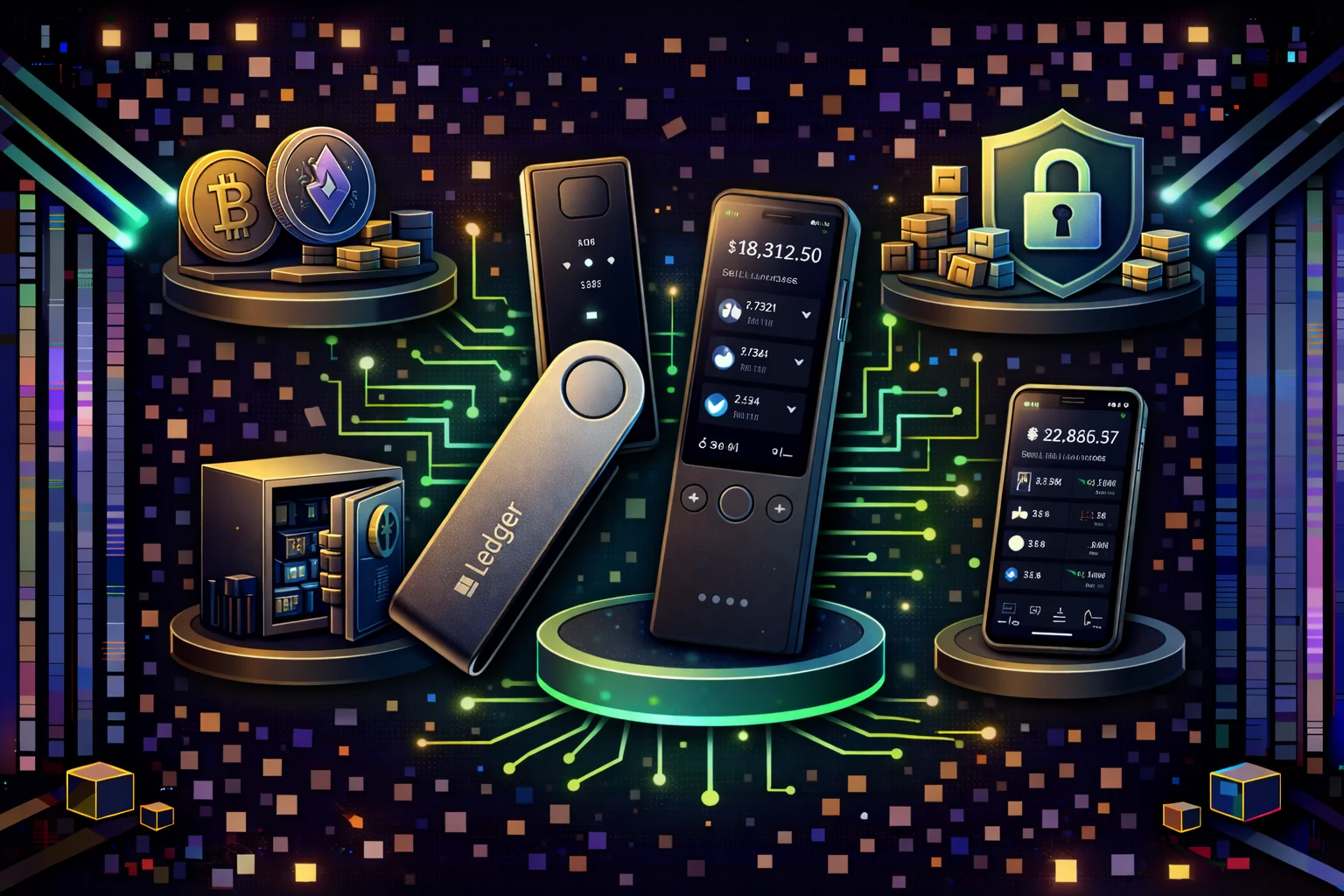
Ledger is a French hardware wallet manufacturer founded in 2014, with over 6 million devices sold. The product line includes the Nano S Plus (€79, USB-C, 5500+ supported assets), Nano X (€149, Bluetooth + USB-C, mobile-compatible), and Stax (€279, E Ink touchscreen, wireless charging). All three use a CC EAL5+ certified secure element chip — the same certification level as bank cards and passports — to store private keys in isolated hardware that never exposes them to the host computer.
Ledger's dual-chip architecture separates the secure element (which holds keys and signs transactions) from a general-purpose microcontroller (which handles the display and USB/Bluetooth communication). This design means even if the host computer is compromised by malware, the private keys remain physically inaccessible. Transaction details are displayed on the device screen for manual verification before signing — a protection that software wallets cannot offer.
The Ledger Live companion app (desktop + mobile) provides portfolio tracking, built-in exchange (via Changelly/Paraswap), staking for ETH/SOL/DOT/ATOM and 10+ other assets, and DeFi access through WalletConnect. Ledger Live eliminates the need to use separate wallet interfaces for most operations, though advanced DeFi users may still prefer MetaMask with Ledger as the signing backend.
Setup of a Nano X took approximately 15 minutes in our testing: unboxing, PIN creation, 24-word seed phrase backup, and Ledger Live pairing via Bluetooth. The Bluetooth connection was stable on iOS but occasionally dropped on Android during firmware updates — a known issue that Ledger acknowledges in their support documentation. The two-button navigation on Nano S Plus and Nano X is functional but slow for verifying long addresses; Stax's touchscreen is a significant usability upgrade for users who sign transactions frequently.
What's New in Ledger
Ledger continued to evolve in 2025 with significant firmware updates that improved Bluetooth stability on the Nano X, enhanced NFT support across multiple blockchains, and expanded staking capabilities through Ledger Live. The company has also clarified its position on Ledger Recover, making it completely optional and addressing privacy concerns raised by the crypto community.
New partnerships with major DeFi protocols have enabled native integration for popular services, including Lido staking, Compound lending, and Uniswap trading, directly through Ledger Live. Ledger now supports over 5,500 cryptocurrencies and tokens, making it one of the most comprehensive crypto wallet solutions available.
Security enhancements include improved secure element firmware, additional protection against side-channel attacks, and enhanced PIN protection features. Ledger has also expanded its educational resources and improved customer support response times in response to user feedback.
The company has strengthened its position in the institutional market by enhancing its enterprise features, including multi-signature support, advanced account management tools, and compatibility with professional custody solutions. These developments demonstrate Ledger's commitment to serving both retail and institutional crypto users with industry-leading protection standards.
Ledger's continued innovation in 2025 includes improved mobile app functionality, enhanced desktop integration, and expanded educational resources to help users maximise the protection and utility of their crypto wallets. The company's focus on user experience improvements while maintaining uncompromising protection standards has solidified its position as the market leader in crypto wallet solutions.
Ledger Overview: The Hardware Wallet Pioneer
Founded in 2014 by Eric Larchevêque, Joel Pobeda, and Nicolas Bacca, Ledger has established itself as the world's leading manufacturer of crypto wallets and the pioneer of secure crypto storage solutions. Based in Paris, France, the company has sold over 6 million devices globally and secured more than 20% of the world's crypto assets through its innovative crypto wallet solutions, making it the most trusted name in crypto protection.
The company's mission extends beyond simple crypto storage to making crypto protection accessible to everyone, from individual investors managing small portfolios to large institutions securing billions in crypto assets. Ledger's crypto wallets utilise proprietary secure element technology, combined with custom operating systems and rigorous protection protocols, to provide bank-grade protection that exceeds industry standards for crypto storage and transaction management.
What sets Ledger apart from competitors is its unique focus on balancing maximum protection with exceptional usability. Whilst maintaining the highest protection standards through certified secure elements, extensive penetration testing, and continuous protection audits, the company has also created intuitive user interfaces and comprehensive software ecosystems that make crypto wallets accessible to mainstream users without compromising protection.
Ledger's commitment to open-source development and transparency has earned the trust of the crypto community, with regular protection audits by independent researchers and active engagement with the broader blockchain ecosystem. The company's devices support over 5,500 cryptocurrencies and tokens across multiple blockchains, making them the most comprehensive crypto wallet solution available in 2025 for users seeking to secure diverse crypto portfolios.
Security Architecture & Technology
Secure Element Technology
These devices utilise certified secure elements (CC EAL5+), the same chips used in credit cards, passports, and SIM cards. These specialised processors are designed to resist physical, side-channel, and fault-injection attacks. The secure element stores private keys and performs cryptographic operations in a tamper-resistant environment.
BOLOS Operating System
The proprietary Blockchain Open Operating System (BOLOS) provides a secure foundation for crypto applications. BOLOS isolates each crypto app in its own safe environment, preventing cross-contamination and ensuring that compromising one app cannot affect others or access private keys.
Multi-Layer Security Model
The manufacturer implements a multi-layer protection approach combining hardware, firmware, and software protections. The secure element handles sensitive operations, while a separate microcontroller manages the user interface and communication. This architecture ensures that even if the communication layer is compromised, private keys remain secure.
Physical Security Features
These hardware devices incorporate physical protection features, including tamper-evident packaging, secure boot processes, and anti-tampering mechanisms. The units are designed to detect physical manipulation attempts and can permanently disable themselves if tampering is detected, protecting user funds from sophisticated physical attacks.
Ledger Product Lineup
Ledger Nano S Plus ($79)
The Nano S Plus is Ledger's entry-level offering, providing essential crypto wallet functionality at an affordable price. Despite its lower cost, it maintains the same protection standards as more expensive models, using the same secure element and BOLOS operating system.
Key features include USB-C connectivity, support for 100+ simultaneous apps, a transparent OLED display, and physical buttons for transaction confirmation. Ledger can store unlimited cryptocurrencies by installing and uninstalling apps as needed, with all private keys remaining secure regardless of which apps are currently installed.
Ledger Nano X ($149)
The Nano X is the flagship device, offering premium features for users who want maximum convenience and functionality. The larger screen, Bluetooth connectivity, and built-in battery make it ideal for mobile use and frequent transactions.
Advanced features include wireless connectivity to smartphones and tablets, 8-hour battery life, support for 100+ simultaneous apps, and enhanced storage capacity. The Bluetooth connection uses end-to-end encryption and never transmits private keys, maintaining protection while providing convenience.
Ledger Stax
The upcoming premium device features a large E Ink display, wireless charging, and an enhanced user interface. The Stax is designed for power users seeking the ultimate crypto wallet experience, with improved usability and advanced features.
Ledger Live Ecosystem
Portfolio Management
The Live application serves as the central hub for managing crypto portfolios stored on hardware devices. The application provides real-time portfolio tracking, price alerts, and comprehensive transaction history across all supported cryptocurrencies and blockchains.
Native DeFi Integration
The Live service offers native integration with major DeFi protocols, enabling users to stake, lend, and trade directly from the application while maintaining crypto wallet protection. Supported services include Ethereum 2.0 staking, Lido liquid staking, Compound lending, and Uniswap trading.
NFT Support
Ledger provides comprehensive NFT management capabilities, allowing users to view, send, and receive NFTs across multiple blockchains. Ledger Live displays NFT metadata, images, and collection information while securely storing NFT ownership keys.
Third-Party Integrations
Ledgers integrate with numerous third-party wallets and applications, including MetaMask, MyEtherWallet, Electrum, and many DeFi protocols. This compatibility enables users to access the broader crypto ecosystem while maintaining the protection of their crypto wallet.
Supported Cryptocurrencies & Blockchains
Major Cryptocurrencies
Ledger supports all major cryptocurrencies, including Bitcoin, Ethereum, Litecoin, Bitcoin Cash, and Ripple. Ledgers support both native cryptocurrencies and tokens from various blockchain services, with dedicated apps for each supported blockchain.
Ethereum Ecosystem
Comprehensive support for the Ethereum ecosystem encompasses ERC-20 tokens, ERC-721 NFTs, ERC-1155 multi-tokens, and Layer 2 solutions such as Polygon, Arbitrum, and Optimism. Users can interact with smart contracts and DeFi protocols while keeping their crypto wallet protected.
Alternative Blockchains
Ledger supports numerous alternative blockchains, including Cardano, Solana, Polkadot, Cosmos, Tezos, and many others. Each blockchain has dedicated applications that handle network-specific features, such as staking, governance, and smart contract interactions.
Staking Support
Native staking support is available for proof-of-stake cryptocurrencies, including Ethereum, Cardano, Solana, Cosmos, Tezos, and Algorand. Users can participate in network validation and earn staking rewards while maintaining control of their private keys.
Setup Process & User Experience
Initial Setup
Setting up Ledger is straightforward and secure. The process involves generating a 24-word recovery phrase, setting a PIN code, and installing Ledger Live application. The entire setup can be completed in 15-20 minutes with clear step-by-step guidance.
Recovery Phrase Security
The 24-word recovery phrase is generated entirely on Ledger using true random number generation. This phrase is never stored on Ledger and can restore access to all cryptocurrencies if the crypto wallet is lost or damaged. Ledger provides recovery sheets and emphasises the importance of secure offline storage.
Daily Usage
Daily use involves connecting Ledger to a computer or smartphone, entering the PIN, and confirming transactions on Ledger's screen. The physical confirmation requirement ensures that transactions cannot be executed without physical access to Ledger.
Mobile Experience
The Nano X's Bluetooth connectivity enables seamless mobile usage through Ledger's Live mobile app. Users can manage their portfolios, send transactions, and access DeFi services directly from their smartphones, all while maintaining crypto wallet protection.
Ledger Recover: Understanding the Controversy
What is Ledger Recover?
Ledger Recover is an optional subscription service that lets users back up their recovery phrase using encrypted shards distributed across multiple secure servers. Ledger is designed to help users who might lose their recovery phrase while maintaining protection through cryptographic splitting.
Privacy Concerns
The crypto community raised concerns about Ledger Recover because it contradicts the principle that recovery phrases should never leave Ledger. Whilst Ledger uses advanced cryptography and requires identity verification to recover funds, some users prefer the original model where phrases never leave the hardware.
Opt-In Nature
Ledger has clarified that Recover is entirely optional and disabled by default. Users who prefer traditional crypto wallet protection can continue using their devices exactly as before, with recovery phrases remaining entirely offline. Ledger only activates when users explicitly enable it.
Technical Implementation
For users who choose to enable Recover, Ledger uses Shamir's Secret Sharing to split the recovery phrase into encrypted shards. These shards are distributed across geographically separated servers operated by different companies, requiring multiple shards and identity verification to reconstruct the original phrase.
Ledger vs Hardware Wallet Competitors
Ledger vs Trezor
Trezor offers open-source firmware and a more transparent development process, while Ledger provides superior protection through certified secure elements. Ledger supports more cryptocurrencies and offers better mobile integration, while Trezor appeals to users who prioritise open-source software and transparency.
Ledger vs Tangem
Tangem offers a card-based form factor with NFC connectivity, making it more portable and convenient for daily use. Ledger offers more comprehensive software integration and supports advanced features, including DeFi integration. Choose Tangem for simplicity and portability, Ledger for comprehensive functionality.
Ledger vs KeepKey
KeepKey offers a larger screen and open-source software, but supports fewer cryptocurrencies and lacks mobile integration. Ledger provides better protection through secure elements, more comprehensive cryptocurrency support, and a superior software ecosystem. KeepKey appeals to users who prioritise large displays and open-source software.
Ledger vs Software Wallets
Software wallets like Simple Wallet or MetaMask offer convenience and free usage but store private keys on internet-connected devices. Ledger provides superior protection through offline key storage but requires physical access to Ledger for transactions. Use software wallets for small amounts and daily transactions, crypto wallets for significant holdings.
Advantages & Disadvantages
Advantages:
- Industry-Leading Security: Certified secure elements and proprietary BOLOS operating system
- Comprehensive Support: Over 5,500 cryptocurrencies and tokens supported
- User-Friendly Software: Intuitive Ledger Live application with portfolio management
- Mobile Integration: Bluetooth connectivity on Nano X for smartphone usage
- DeFi Integration: Native support for staking, lending, and trading protocols
- Proven Track Record: Over 6 million devices sold with strong protection history
- Regular Updates: Continuous firmware and software improvements
- Multiple Models: Options for different budgets and use cases
- Third-Party Compatibility: Works with numerous wallets and applications
- Educational Resources: Comprehensive guides and customer support
Disadvantages:
- Physical Device Requirement: Must have device for all transactions
- Learning Curve: Initial setup and usage may intimidate beginners
- Cost: Hardware purchase required unlike free software wallets
- Ledger Recover Controversy: Optional backup service raised privacy concerns
- App Limitations: Limited number of apps can be installed simultaneously
- Bluetooth Security: Some users prefer wired-only connections
- Proprietary Software: Closed-source firmware unlike some competitors
- Customer Data Breach: 2020 breach exposed customer information (not funds)
Who Should Use Ledger Wallets?
Long-Term Investors
Ledger wallets are ideal for long-term cryptocurrency investors who prioritise protection over convenience. The crypto wallet approach offers maximum protection for significant holdings, while also supporting staking and DeFi activities that can generate passive income over time.
Security-Conscious Users
Users who understand the risks associated with storing cryptocurrency on exchanges or in software wallets will appreciate Ledger's protection-first approach. The certified secure elements and offline key storage protect against hacking, malware, and exchange failures.
DeFi Participants
Active DeFi users can benefit from Ledger's native support for major protocols while maintaining the protection of a crypto wallet. The ability to stake, lend, and trade directly through Ledger Live provides convenience without compromising protection.
Multi-Cryptocurrency Holders
Users with diverse cryptocurrency portfolios will appreciate Ledger's support for over 5,500 assets across multiple blockchains. The unified device Live interface simplifies portfolio management while maintaining protection across all holdings.
Mobile Users
The Nano X's Bluetooth connectivity makes it suitable for users who want the protection of a crypto wallet with the convenience of mobile use. The ability to manage portfolios and execute transactions from smartphones while maintaining offline key storage appeals to mobile-first users.
Security Best Practices
Recovery Phrase Management
Store your 24-word recovery phrase in multiple secure locations, preferably offline and in a fireproof safe. Consider using metal backup solutions for long-term storage, and never store the phrase digitally or photograph it. Test your backup by recovering a small amount on a secondary device.
Device Security
Always purchase Ledgers directly from the official website or authorised retailers to avoid tampered devices. Verify Ledger's authenticity using Ledger's verification process, and never use a device that comes with a pre-generated recovery phrase.
PIN and Access Control
Use a strong PIN code and enable the auto-lock feature to protect against unauthorised access. Consider using different PIN codes for different protection levels if your device supports multiple profiles. Never share your PIN or leave your device unlocked and unattended.
Software Security
Only download Ledger Live from official sources and verify software signatures when possible. Keep your device firmware and Ledger Live software updated to ensure you have the latest protection patches and features. Be cautious of phishing attempts and always verify URLs.
Transaction Verification
Always verify transaction details on Ledger screen before confirming, including recipient addresses, amounts, and network fees. Never approve transactions that you didn't initiate or that show unexpected details. Ledger screen is the ultimate source of truth for transaction information.
User Reviews & Community Feedback
Positive User Experiences
"I've been using Ledger Nano X since 2021. It's intuitive and provides peace of mind, especially with long-term HODLing. The Bluetooth feature is convenient for mobile use, and I love being able to stake directly through Ledger Live."
"After losing money on exchanges, I moved everything to Ledger. The setup was easier than expected, and Ledger Live makes portfolio management simple. The protection gives me confidence to hold larger amounts."
"The DeFi integration is fantastic. I can participate in staking and lending while keeping my keys secure. The Nano S Plus is perfect for my budget, and it has all the protection features of the more expensive models."
Common User Concerns
" Ledger Live is great, but I was sceptical about the Recover feature. Thankfully, it's opt-in, so I can continue using my device the traditional way without any protection changes."
"The app limit can be annoying when you hold many different cryptocurrencies. Having to install and uninstall apps isn't a big deal, but it would be nice to have unlimited simultaneous apps."
Community Sentiment
Overall community sentiment towards Ledger remains positive, with users consistently praising the protection, ease of use, and comprehensive cryptocurrency support. Ledger recovery controversy initially raised concerns, but Ledger's opt-in model and clear communication have largely alleviated them.
Long-term users, in particular, appreciate the regular firmware updates, expanded cryptocurrency support, and enhanced DeFi integration. Ledger maintains strong ratings across review sites and continues to be recommended by protection experts and cryptocurrency educators.
Ledger vs Competitors
| Feature | Ledger Nano X | Ledger Nano S Plus | Trezor Model T | Tangem |
|---|---|---|---|---|
| Price | $149 | $79 | $219 | $65 |
| Connectivity | USB-C + Bluetooth | USB-C only | USB-C + microSD | NFC only |
| Screen | 128x64 px | 128x64 px | 240x240 touchscreen | No screen |
| Supported Coins | 5,500+ | 5,500+ | 1,800+ | 6,000+ |
| Mobile Support | ✅ iOS & Android | ❌ Desktop only | ✅ iOS & Android | ✅ iOS & Android |
| Staking | ✅ 15+ networks | ✅ 15+ networks | ✅ Limited | ❌ No |
| Best For | Mobile users | Budget-conscious | Open-source fans | Simplicity |
Enterprise Security and Professional Applications
Institutional Custody and Multi-Signature Solutions
Professional cryptocurrency management increasingly relies on device crypto wallets for institutional custody solutions that provide bank-grade protection while maintaining operational efficiency and regulatory compliance. Enterprise applications include multi-signature treasury management, sophisticated access control systems, and comprehensive audit trails that meet institutional protection standards while enabling efficient cryptocurrency operations for corporations, investment funds, and financial institutions requiring professional-grade custody solutions.
Advanced institutional implementations leverage Ledger's enterprise features, including custom firmware configurations, comprehensive policy management, and support for professional custody services that enable sophisticated multi-party authorisation, systematic risk management, and comprehensive compliance frameworks. Professional users implement hardware protection modules, comprehensive backup procedures, and systematic protection protocols that ensure appropriate protection of institutional cryptocurrency holdings while maintaining operational efficiency and regulatory compliance.
Advanced Security Protocols and Risk Management
Professional device implementations require sophisticated protection protocols that address both technical vulnerabilities and operational risks through systematic approaches to device management, backup procedures, and access control systems. Advanced protection strategies include comprehensive threat modelling, systematic vulnerability assessments, and professional-grade incident response procedures that ensure appropriate protection against various attack vectors while maintaining operational efficiency and user accessibility for complex cryptocurrency management requirements.
Enterprise risk management frameworks include systematic device lifecycle management, comprehensive backup and recovery procedures, and sophisticated access control systems that ensure appropriate protection while enabling efficient operations. Professional users implement multi-device redundancy, systematic protection monitoring, and comprehensive staff training programs that ensure consistent protection standards while maintaining operational flexibility and enabling efficient cryptocurrency management across complex organisational structures and regulatory requirements.
Future Developments and Technology Roadmap
Next-Generation Hardware Security
Ledger continues advancing hardware wallet technology through research into quantum-resistant cryptography, enhanced biometric authentication, and improved user experience features that maintain security while simplifying cryptocurrency management for mainstream adoption. Future developments include support for emerging blockchain networks, enhanced mobile connectivity, and sophisticated multi-signature capabilities that provide institutional-grade security for professional cryptocurrency management operations.
The technology roadmap includes development of advanced security features, improved support for decentralised finance protocols, and enhanced support for emerging cryptocurrency standards that ensure long-term viability and continued security leadership in the evolving cryptocurrency ecosystem. These innovations demonstrate Ledger's commitment to maintaining its position as the leading hardware wallet provider through continuous technological advancement and user-focused development initiatives.
Enterprise and Institutional Features
Corporate Security Infrastructure
Ledger's enterprise solutions provide a comprehensive protection infrastructure designed for institutional cryptocurrency management and corporate treasury operations. Ledger Vault service offers enterprise-grade custody solutions with multi-signature governance, role-based access controls, and sophisticated approval workflows that meet corporate protection requirements. Institutional clients benefit from dedicated hardware protection modules, air-gapped transaction signing, and comprehensive audit trails that support regulatory compliance and internal controls.
Corporate protection features include support for existing enterprise protection infrastructure, support for hardware protection modules (HSMs), and support for institutional custody standards. Ledger provides detailed transaction logging, comprehensive reporting capabilities, and support for compliance monitoring systems that enable institutions to maintain proper oversight of cryptocurrency operations while ensuring regulatory compliance across multiple jurisdictions.
Advanced Multi-Signature and Governance
Ledger's multi-signature capabilities extend beyond basic threshold signatures to include sophisticated governance mechanisms suitable for institutional operations. Ledger supports complex approval workflows, time-locked transactions, and hierarchical access controls, enabling institutions to implement comprehensive governance frameworks for cryptocurrency management. Advanced features include conditional transactions, automated compliance checks, and support for external governance systems.
Governance features include support for decentralised autonomous organisation (DAO) participation, on-chain voting mechanisms, and support for governance protocols across multiple blockchain networks. Institutional users can participate in blockchain governance while maintaining protection through hardware-backed transaction signing and comprehensive audit trails. Ledger also supports delegation mechanisms and proxy voting systems that enable sophisticated governance participation strategies.
Professional Trading and DeFi Integration
Ledgers integrate seamlessly with professional trading services and institutional DeFi protocols, enabling secure transaction signing for high-volume trading operations and sophisticated investment strategies. Ledger supports algorithmic trading systems, automated market-making protocols, and advanced DeFi strategies while maintaining the security benefits of crypto wallet protection. Professional traders benefit from batch transaction processing, automated signing workflows, and support for risk management systems.
DeFi integration features include support for complex multi-step transactions, support for yield farming protocols, and support for advanced DeFi strategies such as flash loans and arbitrage operations. Ledger's DeFi capabilities include transaction simulation, gas optimisation, and support for DeFi analytics services, enabling sophisticated investors to implement complex strategies while maintaining protection through hardware-backed transaction signing.
Compliance and Regulatory Features
Ledger's compliance features address the regulatory requirements of institutional cryptocurrency operations, including comprehensive transaction monitoring, automated compliance reporting, and support for regulatory reporting systems. Ledger provides detailed audit trails, transaction categorisation, and compliance analytics that support regulatory reporting requirements across multiple jurisdictions. Advanced compliance features include automated sanctions screening, transaction risk assessment, and support for compliance monitoring services.
Regulatory features include support for various compliance frameworks, including anti-money laundering (AML) requirements, know-your-customer (KYC) procedures, and regulatory reporting obligations. Ledger provides comprehensive documentation, audit support, and support for external compliance systems that enable institutions to maintain regulatory compliance while benefiting from the protection advantages of crypto wallet technology.
Developer Tools and Integration Capabilities
Ledger provides comprehensive developer tools and APIs that enable seamless support for existing cryptocurrency infrastructure and custom applications. Ledger offers software development kits (SDKs) for major programming languages, detailed documentation for developers, and extensive examples for common integration scenarios. Professional developers can leverage Ledger's capabilities to build custom cryptocurrency management solutions, integrate with existing business systems, and develop specialised applications for institutional cryptocurrency operations.
Integration capabilities include support for custom firmware development, plugin architecture for specialised applications, and support for enterprise protection frameworks. Advanced users can customise device behaviour, implement specialised protection policies, and integrate Ledgers with automated systems and portfolio management services. Ledger's flexibility makes it suitable for sophisticated cryptocurrency operations requiring customised protection solutions and specialised operational workflows.
Global Support and Professional Services
Ledger provides comprehensive professional services designed for institutional clients, including dedicated account management, custom integration support, and priority technical support. Enterprise clients benefit from service level agreements (SLAs), guaranteed response times, and access to Ledger's technical experts for complex integration projects and troubleshooting. Professional services include training programmes, protection assessments, and ongoing support for large-scale cryptocurrency operations.
Global support capabilities include multilingual support, regional compliance expertise, and local partnership networks that enable institutions to implement Ledger solutions across multiple jurisdictions. Ledger provides comprehensive documentation, training materials, and certification programmes that enable institutions to develop internal expertise and maintain effective cryptocurrency protection operations. Ongoing support includes regular protection updates, feature enhancements, and access to new capabilities as they become available.
Ecosystem Innovation and Future Technology
Blockchain Technology Integration and Multi-Chain Support
Ledger's continuous innovation in blockchain technology integration ensures support for emerging blockchain networks, new cryptocurrency protocols, and evolving protection standards. Ledger's modular architecture enables rapid deployment of support for new blockchain networks while maintaining protection and reliability standards across all supported cryptocurrencies. Advanced integration capabilities include support for complex transaction types, sophisticated smart contract interactions, and comprehensive protocol compatibility that enables users to participate in diverse blockchain ecosystems.
Multi-chain support includes sophisticated cross-chain functionality, comprehensive asset management across multiple blockchain networks, and advanced portfolio tracking capabilities that provide users with unified oversight of their cryptocurrency holdings. Ledger's development roadmap includes support for emerging blockchain technologies, support for new consensus mechanisms, and advanced interoperability solutions that position Ledger users at the forefront of blockchain innovation while maintaining protection and ease of use.
Security Innovation and Cryptographic Advances
Ledger's commitment to protection innovation includes implementation of advanced cryptographic techniques, quantum-resistant protection measures, and sophisticated threat detection systems that protect against emerging protection risks. Ledger's protection research and development initiatives include collaboration with leading cryptographic researchers, participation in protection standards development, and continuous improvement of protection protocols to address evolving threat landscapes and technological developments.
Cryptographic advances include implementation of post-quantum cryptography, advanced key derivation mechanisms, and sophisticated authentication protocols that ensure long-term protection of user assets. Ledger's protection architecture includes multiple layers of protection, from hardware-level protection features to software-based threat detection and response systems that provide comprehensive protection against diverse attack vectors and protection threats.
User Experience Enhancement and Accessibility Improvements
Continuous user experience improvements focus on making cryptocurrency protection more accessible to users of all technical backgrounds while maintaining the highest protection standards. User interface enhancements include intuitive navigation, comprehensive help systems, and sophisticated onboarding processes that guide new users through secure cryptocurrency management practices. Advanced accessibility features include support for users with disabilities, multilingual interfaces, and comprehensive documentation that enables effective use across diverse user populations.
Experience enhancements include mobile application improvements, desktop software optimisation, and comprehensive support for popular cryptocurrency services and services. Ledger's development priorities include reducing complexity while maintaining protection, improving transaction confirmation processes, and providing comprehensive educational resources that enable users to make informed decisions about their cryptocurrency protection and management practices.
Partnership Ecosystem and Industry Collaboration
Ledger's partnership ecosystem includes collaboration with leading cryptocurrency exchanges, DeFi protocols, and institutional service providers that enhance Ledger's capabilities and user experience. Strategic partnerships enable seamless support for popular cryptocurrency services, comprehensive support for emerging protocols, and advanced functionality that extends beyond basic cryptocurrency storage to include sophisticated portfolio management and yield generation opportunities.
Industry collaboration includes participation in protection standards development, contribution to open-source cryptocurrency projects, and leadership in crypto wallet innovation that benefits the entire cryptocurrency ecosystem. Ledger's collaborative approach ensures that Ledger users benefit from the latest developments in cryptocurrency technology while maintaining the protection and reliability standards that define crypto wallet excellence and professional cryptocurrency management requirements.
Enterprise Security Solutions and Institutional Hardware Wallet Management
Corporate Cryptocurrency Custody and Multi-Signature Integration
Ledger's enterprise solutions provide sophisticated cryptocurrency custody capabilities that address the complex protection requirements of corporate treasuries, institutional investors, and professional asset managers. Enterprise crypto wallet management includes comprehensive multi-signature implementations, advanced access controls, and sophisticated audit capabilities that enable organisations to maintain secure custody of large cryptocurrency holdings while meeting regulatory compliance and fiduciary obligations through professional-grade protection infrastructure.
Corporate custody solutions include dedicated hardware protection modules, comprehensive backup procedures, and sophisticated recovery mechanisms that provide institutional-grade protection while maintaining operational efficiency for frequent transactions. Professional custody frameworks utilise advanced cryptographic techniques, comprehensive access logging, and sophisticated governance systems that enable secure multi-user access while maintaining appropriate oversight and control mechanisms for institutional cryptocurrency operations.
Advanced Security Features and Professional Risk Management
Professional crypto wallet protection includes sophisticated threat detection systems, comprehensive vulnerability assessment capabilities, and advanced protection mechanisms that address evolving protection challenges in the cryptocurrency ecosystem. Enterprise protection features include tamper-evident hardware design, secure element integration, and comprehensive firmware validation that provides protection against sophisticated attacks while maintaining user-friendly operation for professional cryptocurrency management requirements.
Risk management for institutional crypto wallet deployment includes comprehensive protection auditing, systematic vulnerability assessment, and professional incident response capabilities that ensure appropriate protection for high-value cryptocurrency holdings. Advanced risk management systems provide real-time monitoring, automated alert mechanisms, and comprehensive reporting capabilities that enable proactive protection management while maintaining operational efficiency and user experience standards required for professional cryptocurrency custody operations.
Innovation Excellence and Future Technology
Next-Generation Protection Technology
Ledger continues advancing protection technology through the implementation of quantum-resistant cryptographic algorithms, enhanced biometric authentication systems, and sophisticated threat detection mechanisms that prepare for future protection challenges while maintaining current operational excellence. Innovation priorities include development of advanced protection protocols, support for emerging blockchain networks, and comprehensive support for next-generation cryptocurrency standards that ensure long-term investment protection and operational sustainability.
Future technology development includes artificial intelligence integration for automated threat detection, machine learning algorithms for user behavior analysis, and sophisticated anomaly detection systems that enhance protection while maintaining user privacy and operational efficiency. Advanced protection innovation focuses on creating seamless user experiences that combine maximum protection with operational simplicity, enabling users to benefit from cutting-edge protection technology while maintaining ease of use and accessibility for diverse user requirements and applications.
Quantum-Resistant Cryptography and Advanced Mathematical Security
Ledger's research and development initiatives include implementation of post-quantum cryptographic algorithms, advanced elliptic curve implementations, and sophisticated mathematical security frameworks that provide long-term protection against emerging computational threats including quantum computing advances. Professional security architecture incorporates advanced cryptographic protocols, comprehensive key derivation mechanisms, and sophisticated entropy generation systems that ensure maximum security while maintaining support for existing blockchain networks and cryptocurrency protocols for seamless user experience and operational continuity.
Professional Certification and Compliance Excellence
Ledger maintains comprehensive certification programmes including Common Criteria EAL5+ certification, FIPS 140-2 Level 3 compliance, and ISO 27001 information security management standards that demonstrate commitment to professional security excellence. Regulatory compliance includes adherence to European Union security standards, United States federal security requirements, and international cryptographic standards that enable institutional deployment across multiple jurisdictions while maintaining consistent security and operational excellence standards.
Compliance excellence extends to comprehensive audit capabilities, detailed security documentation, and professional certification programmes that enable institutional clients to meet regulatory requirements while maintaining operational efficiency. Advanced compliance features include comprehensive audit trails, detailed transaction logging, and sophisticated reporting capabilities that support regulatory compliance requirements across diverse jurisdictions and operational environments while maintaining user privacy and security standards.
Enterprise Integration and Institutional Excellence
Enterprise integration capabilities include comprehensive API support, advanced authentication systems, and sophisticated integration frameworks that enable seamless deployment within institutional technology environments. Professional services include dedicated technical support, custom integration assistance, and comprehensive training programmes that enable institutions to maximise the value of their Ledger deployment while maintaining security and operational excellence standards required for professional cryptocurrency custody operations.
Institutional excellence includes comprehensive service level agreements, guaranteed response times, and access to Ledger's technical experts for complex integration projects and ongoing operational support. Advanced enterprise features include multi-signature capabilities, sophisticated access control systems, and comprehensive audit capabilities that meet the requirements of institutional cryptocurrency operations while maintaining the security and reliability standards that define professional cryptocurrency custody excellence and operational sustainability.
Our Verdict on Ledger
Ledger remains the gold standard for crypto wallets in 2025, successfully balancing maximum protection with user-friendly design and comprehensive functionality. Despite the Ledger Recover controversy, the company's transparent communication and opt-in approach have maintained community trust while providing options for different user preferences.
The combination of certified secure elements, proprietary BOLOS operating system, and comprehensive device Live ecosystem creates the most complete crypto wallet solution available. The support for over 5,500 cryptocurrencies, native DeFi integration, and mobile connectivity through the Nano X make Ledger suitable for both beginners and advanced users.
For anyone holding significant amounts of cryptocurrency or seeking the highest level of protection, device wallets represent the best investment in protecting those holdings. The peace of mind provided by offline key storage and a proven protection architecture far outweighs the minor inconveniences of using a crypto wallet.
Whether you choose the budget-friendly Nano S Plus or the feature-rich Nano X, Ledger provides institutional-grade protection that has protected billions of dollars in cryptocurrency assets. In an industry where protection breaches and exchange failures are common, Ledger offers the reliability and protection that serious cryptocurrency investors require.
Conclusion
Ledger has successfully maintained its position as the industry leader in crypto wallet technology throughout 2025, continuing to set the standard for cryptocurrency protection while adapting to evolving user needs and market demands. The company's commitment to transparency, protection, innovation, and user education has solidified its reputation as the most trusted name in cryptocurrency storage solutions, with over 6 million users worldwide relying on Ledgers to protect their cryptocurrencies.
The comprehensive product lineup, from the affordable Nano S Plus to the premium Nano X, ensures that Ledger offers suitable options for every type of cryptocurrency user, whether they're beginners securing their first Bitcoin purchase or institutions managing multi-million dollar portfolios. The integration of advanced features like native DeFi support, NFT management, and mobile connectivity demonstrates Ledger's ability to evolve with the cryptocurrency ecosystem while maintaining uncompromising protection standards that have protected billions of dollars in cryptocurrencies.
What truly distinguishes Ledger in 2025 is its holistic approach to cryptocurrency protection, combining cutting-edge hardware protection with comprehensive software solutions and educational resources. The company's proprietary secure element technology, extensive cryptocurrency support, and continuous firmware updates ensure that users receive not just a hardware device but a comprehensive protection ecosystem that evolves and adapts to the rapidly evolving cryptocurrency landscape.
For anyone serious about cryptocurrency protection, Ledger wallets represent not just a purchase but an investment in peace of mind and long-term asset protection. The combination of proven protection architecture, comprehensive cryptocurrency support, and continuous innovation makes Ledger the clear choice for users who refuse to compromise on the safety of their cryptocurrencies. In a rapidly evolving cryptocurrency landscape where protection threats continue to multiply, Ledger provides the stability, reliability, and advanced protection that both individual and institutional investors require to confidently participate in the cryptocurrency revolution.
For a direct comparison with the seed-phrase-free alternative, see our Ledger vs Tangem comparison.
Sources
Frequently Asked Questions
- What is Ledger and how does it work?
- Ledger is a crypto wallet that stores cryptocurrency private keys offline in a secure chip. When you want to make a transaction, you connect Ledger to your computer or phone, verify the transaction details on Ledger's screen, and physically confirm it by pressing buttons. Your private keys never leave Ledger, providing maximum protection against hacking and malware.
- Is Ledger safe in 2025?
- Yes, Ledger remains one of the safest ways to store cryptocurrency. Ledgers use certified secure elements (CC EAL5+) and the proprietary BOLOS operating system to protect private keys. Whilst the optional Ledger Recover service raised privacy concerns, it's completely opt-in and doesn't affect the core protection model for users who choose not to use it.
- Which device model should I choose?
- Choose the Nano S Plus ($79) if you want basic crypto wallet functionality at an affordable price. Choose the Nano X ($149) if you want Bluetooth connectivity for mobile use, longer battery life, and premium features. Both models offer the same level of protection, so the choice depends on your budget and desired features.
- How many cryptocurrencies does Ledger support?
- Ledger supports over 5,500 cryptocurrencies and tokens across multiple blockchains, including Bitcoin, Ethereum, Cardano, Solana, Polkadot, and many others. You can install up to 100 apps simultaneously on current models, and you can always uninstall and reinstall apps as needed without losing access to your cryptocurrencies.
- Can I use Ledger with my smartphone?
- Ledger Nano X supports Bluetooth connectivity for use with smartphones and tablets through Ledger Live mobile app. The Nano S Plus requires a USB connection to computers but can be used with smartphones that support USB OTG. The Bluetooth connection is encrypted and never transmits private keys.
- What happens if I lose Ledger?
- If you lose your wallet, you can recover all your cryptocurrencies using your 24-word recovery phrase on a new device or any compatible wallet. This is why it's crucial to store your recovery phrase securely offline. Your cryptocurrencies are not stored on Ledger itself but on the blockchain, accessible with your recovery phrase.
- Do I need to use Ledger Recover?
- No, Ledger Recover is completely optional and disabled by default. You can use Ledger exactly as before without ever enabling this service. Ledger Recover is designed for users who want an additional backup option, but traditional offline recovery phrase storage remains the recommended approach for maximum privacy and protection.
- Can I stake cryptocurrencies with Ledger?
- Yes, Ledger supports native staking for many proof-of-stake cryptocurrencies, including Ethereum, Cardano, Solana, Cosmos, Tezos, and Algorand. You can stake directly through Ledger Live while maintaining control of your private keys. Staking rewards are automatically distributed to your wallet, and you can unstake at any time according to each network's rules.
- How do I buy a genuine device?
- Always purchase Ledgers directly from the official device website or authorised retailers listed on their website. Never buy from third-party marketplaces like eBay or Amazon, as these may sell tampered devices. Genuine devices come with tamper-evident packaging and should never include a pre-generated recovery phrase.
- Can I use Ledger with DeFi protocols?
- Yes, Ledger integrates with numerous DeFi protocols both through Ledger Live and third-party applications like MetaMask. You can participate in lending, borrowing, trading, and yield farming while maintaining the protection of your crypto wallet. Popular integrations include Compound, Lido, Uniswap, and many others accessible through Ledger Live or compatible wallets.
- What's the difference between Ledger and exchange storage?
- Exchanges like Binance or Coinbase store your cryptocurrency on their servers, meaning you don't control the private keys. Ledger gives you complete control over your private keys, which are stored offline on your device. This eliminates counterparty risk but requires you to manage your own protection. Use exchanges for trading and Ledger for long-term storage.
- How often should I update Ledger firmware?
- Update Ledger firmware whenever new versions are released, typically every few months. Firmware updates include protection improvements, bug fixes, and new features. Ledger Live will notify you when updates are available. Always update through official Ledger software and never through third-party applications or websites.
Affiliate Disclosure
This page contains affiliate links. When you sign up through our referral links, we may earn a commission at no additional cost to you. This helps support our platform and allows us to continue providing valuable content and recommendations.